How to Clean Gold Jewellery at Home
How do you clean gold jewellery? Safe care methods you can use at home and practical tips to stop gold jewellery from dulling and tarnishing.
Gold is by nature a resilient metal that does not rust and does not wear easily. Even so, rings, necklaces and earrings worn every day can lose their original shine over time and take on a dull look. Dull jewellery does not mean the gold has lost value; it simply means a layer of dirt has built up on the surface from outside factors.
Knowing the right methods lets you restore your jewellery's shine without damaging it. Abrasive techniques can scratch the metal or harm the stones. In this article you will find the safest ways to clean gold jewellery and care routines you can follow with things you have at home.
Why does gold jewellery get dirty and dull?
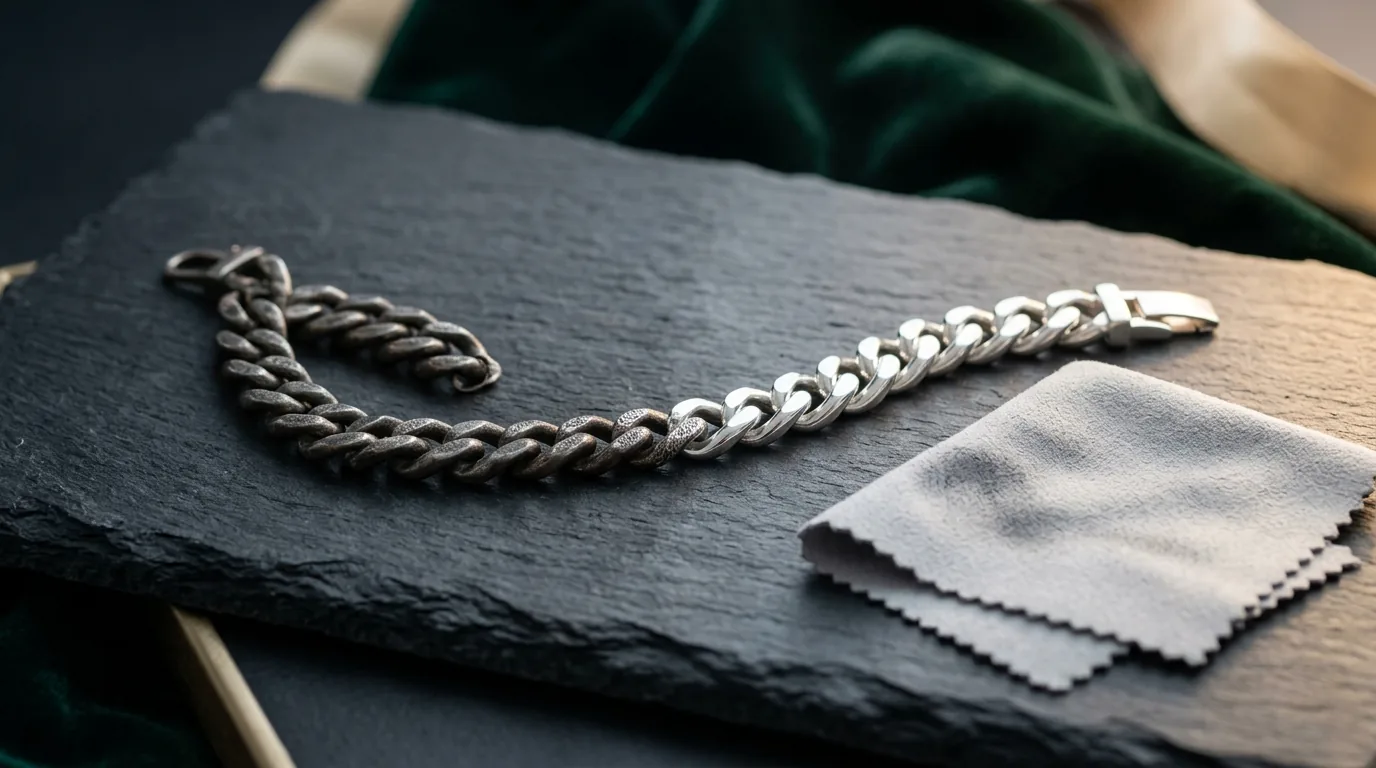
Pure gold does not oxidise, but the gold used in jewellery is mixed with other metals to make it harder. The silver and copper in 14 and 18 karat jewellery in particular can react with sulphur and moisture in the air and cause a slight change of colour on the surface. This reaction is one of the main reasons jewellery slowly dulls.
Our daily habits also speed up the build-up. Sweat, skin oils, hand creams, perfumes and make-up form a thin film on the surface of the gold. Dust sticks to this film and stops the piece reflecting light. A simple clean at regular intervals stops this film becoming permanent.
Cleaning with warm water and washing-up liquid
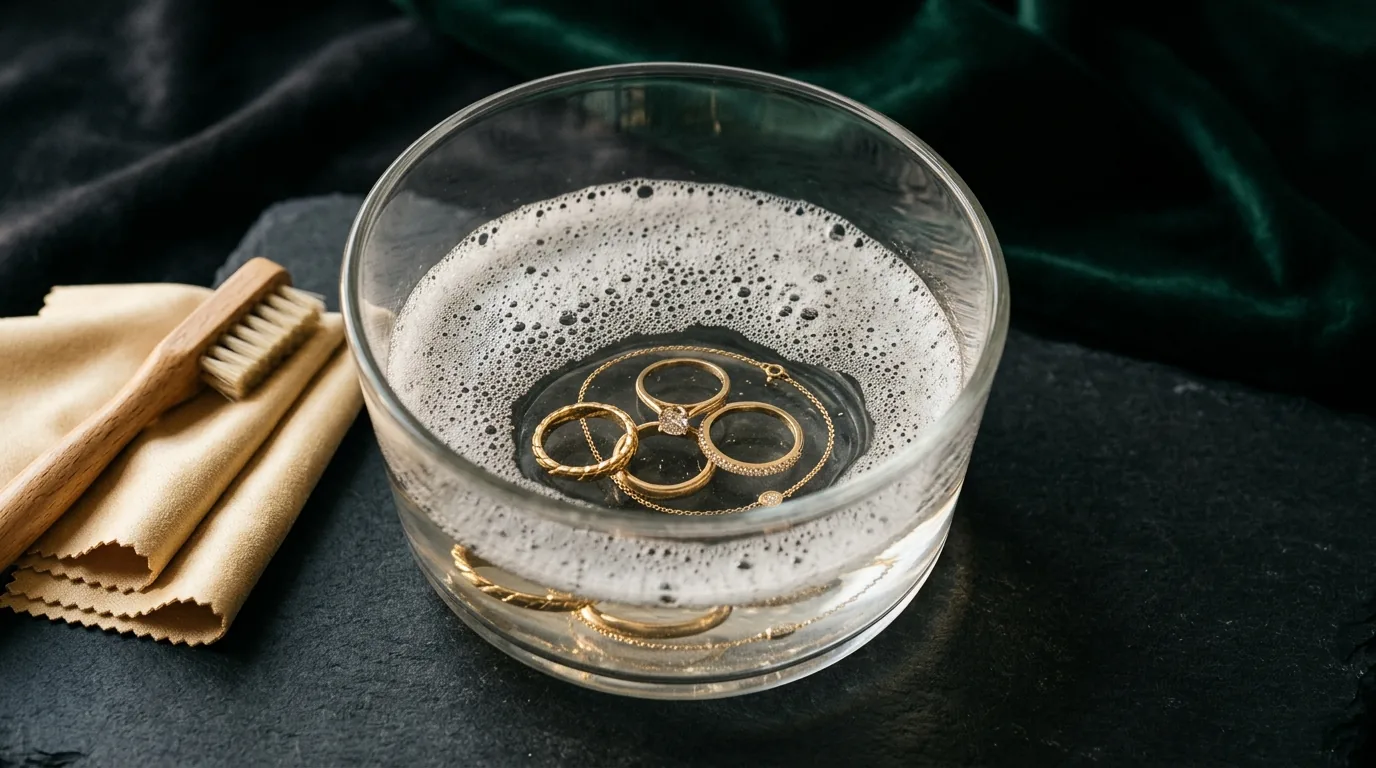
The safest method at home is warm water with a few drops of washing-up liquid. The detergent dissolves oil and cosmetic residue without harming the metal. Fill a small bowl with warm water and add a little detergent to make it foam. Do not use very hot water; warm is enough.
Leave your jewellery in the water for about fifteen minutes. Then brush gently with a soft, unused toothbrush. Pay particular attention to the inside of rings and the settings of stones, where dirt tends to collect. Finally, rinse the pieces in clean water and dry them with a soft, lint-free cloth.
Cleaning with baking soda and foil
If a plain piece without stones has stubborn dullness, you can try the baking soda and aluminium foil method. Do not rub baking soda directly on the jewellery, or you may leave fine scratches. Line a bowl with aluminium foil and place your jewellery on it. Sprinkle a dessert spoon of baking soda over them and add hot water.
This mixture helps remove slight tarnish caused by the silver in the alloy. Five to ten minutes is enough. Then take the pieces out, rinse them well in warm water and dry them with a soft cloth. Do not use this method on jewellery with stones, pearls or plating.
Cleaning jewellery with stones and pearls
Jewellery set with diamonds, zircon, emeralds or pearls needs more care than plain gold. Diamonds attract oil easily, so they dull often. You can clean diamond jewellery with warm soapy water and a soft brush. To see designs with stones, browse our catalogue.
Organic gems such as pearls and coral, however, should not be washed with water and detergent. Pearls are porous and absorb water and chemicals, which can spoil their colour and lustre. Clean pearl and enamel jewellery only by wiping it with a very soft, slightly damp cloth. In models where the stones are glued, hot water can loosen them.
Caring for white gold jewellery
White gold jewellery is plated with rhodium at the end of production. Over time this plating wears and the slightly yellowish colour of the alloy itself shows through. As we explain in white, rose and yellow gold compared, this is not dirt but the plating thinning.
If your white gold piece has started to turn yellow, cleaning at home will not bring back that bright white; it only removes dirt from the surface. To restore the whiteness, the piece needs to be re-plated with rhodium at a jeweller.
Home cleaning methods at a glance
| Type of jewellery | Detergent and warm water | Baking soda and foil | Damp soft cloth |
|---|---|---|---|
| Plain gold without stones | Suitable | Suitable | Little effect |
| Gold with diamonds and stones | Suitable (with a soft brush) | Not suitable | Little effect |
| Gold with pearls or enamel | Not suitable | Not suitable | Suitable |
| Rhodium-plated white gold | Suitable | Not suitable | Suitable |
Protecting jewellery in everyday wear
The most effective way to delay dirt and damage is to keep jewellery away from harsh conditions. Take off your rings and bracelets while doing housework and when using strong chemicals such as bleach. Chlorine can damage gold alloys, so do not wear jewellery in swimming pools or thermal baths.
After using perfume, hairspray or lotion, wait until they have been absorbed into your skin and put your jewellery on last. When you are not wearing them, keep pieces in separate boxes or small fabric pouches so they do not scratch each other. For information on care and repairs, reach us through our contact page.
Frequently Asked Questions
Can gold jewellery be cleaned with toothpaste?
It is not recommended. Toothpaste contains abrasive particles that leave fine scratches on the surface of the gold and make the piece look duller over time.
Do vinegar and lemon harm gold?
Because they are acidic, vinegar and lemon juice can react with metals such as silver and copper in the jewellery. They can also damage stones and enamel, so they are not recommended for cleaning.
How often should I have my jewellery checked by a jeweller?
Having rings and necklaces you wear constantly checked by a jeweller once a year is a good habit. This way they get a professional clean and the stone settings and clasps are checked. Not every method suits every stone, so the cleaning method is chosen to suit the piece.
At Erya Gold Kuyumculuk you can follow live buying and selling prices, and reach our store in Ümraniye with any question.